The Faculty Center invites all faculty and staff to attend the annual Fall Faculty Institute. We recognize that all professional staff support students and welcome everyone to be a part of the conversation around how we all can ensure our students have a meaningful experience on campus.
2026 – Reimagining the Future of Higher Education in Uncertainty
October 15, 2026
Morris Conference Center
Higher education is experiencing profound change marked by uncertainty in research funding, rapid technological evolution, particularly the fast and widespread use of Artificial Intelligence, and shifting expectations for faculty and staff work and student learning. These dynamics are reshaping how institutions sustain teaching, scholarship, and community in increasingly complex environments.
The 2026 SUNY Oneonta Fall Institute planning committee invites proposals that address how faculty and staff can adapt, innovate, and thrive amid these changes. We seek sessions that explore practical and forward-looking strategies for supporting academic work, instructional excellence, and purposeful engagement in higher education. Central to this institute is the guiding question:
How can higher education navigate uncertainty and rapid change while sustaining academic excellence, student success, institutional relevance, and collaborative community?
The following topical areas were a part of the call:
- Uncertainty and Evolving Academic Work
- Adapting teaching, scholarship, and service amid fading or shifting research funding
- Reimagining faculty roles and professional development in changing higher education systems
- Artificial Intelligence and the Future of Teaching and Learning
- Pedagogical innovation and ethical engagement with AI
- Supporting faculty and students in developing critical AI literacy
- Integrating emerging technologies while maintaining people-centered education
- Community Building for Successful Outcomes
- Strengthening faculty, staff, and student communities as foundations for success
- Cross-disciplinary and cross-unit collaboration
- Practices that foster belonging, shared purpose, and collective resilience in higher education
Registration
Registration is now open for the 2026 Fall Faculty Institute. Please register by Thursday, October 8 to reserve your spot for meals.
Agenda
The grid below shows the current version of the agenda. To find more information on specific sessions, please visit the Fall Faculty Institute page.
| TIME | SESSION TITLE | PRESENTER(S) | SESSION TYPE | LOCATION |
|---|---|---|---|---|
| 8:00 – 9:00am | Breakfast | Otsego Grille | ||
| 8:45 – 9:00am | Session Opening and Provost’s Remarks | Provost Morales-Diaz | Opening Session | Otsego Grille |
| 9:00 – 10:00am | Dialogue for Dinner | Sallie Han, Erin Francisco, Chris Keegan, Molly Eldridge, Dejeanae Dillon | Concurrent Session #1 | Craven Lounge |
| 9:00 – 9:25am | Developing Professional Judgement | Wonda Grobblearr | Concurrent Session #1a | Room 130 |
| 9:00 – 9:25am | Pursuing the Benefits of Mindfulness | Brian Lowe | Concurrent Session #1a | Room 104 |
| 9:30 – 9:55am | “Chat, Make My Lesson Plan” | Kelsey Stokes | Concurrent Session #1b | Room 130 |
| 10:15-11:15am | Embedding Credentials into Coursework | Corrine Armstrong, Serap Gurak Ozdemir | Concurrent Session #2 | Room 104 |
| 10:15 – 10:40am | Human Creativity | Scott Maybee | Concurrent Session #2a | Room 130 |
| 10:15 – 10:40am | The New Solution for FARs | Diana Moseman | Concurrent Session #2a | Craven Lounge |
| 10:45 – 11:10am | Mathematics Learning Center | Josh Palmatier | Concurrent Session #2b | Room 130 |
| 10:45 – 11:10am | Strategies for Funding Your Research | University Grant Team | Concurrent Session #2b | Craven Lounge |
| 11:30am – 12:30pm | Lunch | Otsego Grille | ||
| 12:30 – 2:00pm | Lightning Round Presentations | Multiple Presenters | Workshop Sessions | Craven Lounge |
| 12:30 – 2:00pm | QPR Training | J Chester | Workshop Sessions | Room 130 |
| 1:00 – 2:00pm | Credit for Prior Learning – Portfolio Review Process | Cindy Falk | Workshop Session | Room 104 |
| 2:00 – 3:30pm | Community Expo | Multiple Presenters | Exploration Sessions | Otsego Grille |
| 2:00 – 3:30pm | Exploration Space | Multiple Presenters | Exploration Sessions | Craven Lounge |
| 3:40 – 4:00pm | Closing Session | Faculty Center | Craven Lounge | |
| 4:00 – 5:00pm | Reception | Le Cafe |
Past Institutes
About the 2025 Fall Faculty Institute
Aside from service and scholarly projects, the essence of faculty work at SUNY Oneonta is instruction, teaching and learning. It is work that calls for concerted efforts and weighing in on several core considerations including learning goals, knowing your students, mastery of content, and utilizing updated research and pedagogical strategies. While there are many challenges facing faculty, from COVID-19 pandemic and shifting learning goals, to the advancements of Artificial Intelligence, the challenges of the current political climate, and student mental health challenges, it is important to remember the community that our campus provides to explore, research, and implement a wide range of strategies to support student learning. The Fall Faculty Institute is a place to allow the campus to come together to share solutions and broaden community. It seeks to focus on addressing the question how are faculty, who are at the center of instruction, supported to thrive in the existing heightened environment? Topics that address this can include:
- Belonging: Reflect on how conversations of belonging center around the work we do to make sure students are intellectually and socially integrated into the campus community. How do we extend the same zeal for community to ourselves?
- Teaching with Compassion and Compassion Fatigue: Engage in conversation around balancing the expanding support students need to be successful and the fatigue faculty are experiencing with the growing demands.
- Effective Retention Strategies: Share strategies for ensuring student retention and success and how they are or can be implemented across campus.
- Cultivating Collaboration and Community Solidarity: Highlight efforts to build collaboration and community on campus and discuss the positive impacts of such efforts.
- Academic Freedom: Explore the vital role of academic freedom in maintaining an innovative campus culture and vibrant campus dialogue or examine the principles and challenges to academic freedom in higher education.
- Teaching in an Ever-Changing Educational Landscape: Explore current questions in education including: What impact will the current administration have on our higher education landscape? How might this impact our teaching? What steps can/should be taken?
This 2025 Fall Institute is an avenue for faculty to enquire, examine, and explore ways for achieving high-impact instruction and simultaneously connecting to broader communities. Note that the objectives of the Fall Faculty Institute are to:
- Connect faculty across departments and disciplines
- Foster communities through discussion and collaboration
- Share experiences and expertise with pedagogical approaches and research
- Highlight existing resources and opportunities and identify areas for improvement
Keynote Speaker: Rebecca Pope-Ruark
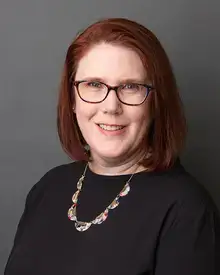
Dr. Rebecca Pope-Ruark is the director of the Office of Faculty Professional Development at the Georgia Institute of Technology in Atlanta, GA. A former tenured professor with 17 years experience teaching undergraduates as well as an experienced facilitator and certified coach, she is the author of two books: Unraveling Faculty Burnout: Pathways to Reckoning and Renewal (Johns Hopkins University Press, 2022) and Agile Faculty: Practical Strategies for Managing Research, Service, and Teaching (University of Chicago Press, 2017). She is also the host of the agile academic, a podcast for women in higher education. Rebecca coaches around the topics of faculty burnout, career development, compassionate leadership, and the day-to-day challenges and opportunities of being a faculty member or leader.
About the 2024 Fall Faculty Institute
Experiential Learning is a high-impact practice identified on campus as a main priority for our students. Learning through action, reflection, and collaboration can foster important skills and connect students with potential employers after college. Because the classroom is an equitable space on campus—all students enroll in courses—incorporating experiential learning skills and opportunities can ensure access for all students.
The Fall Faculty Institute will provide a space to examine how different aspects of experiential learning can be integrated into the classroom and connect with opportunities beyond the classroom. This can include any of the following questions:
- How do you prepare students and scaffold needed skills in the classroom for co-curricular opportunities?
- How do you embed experiential learning into a course or departmental curriculum?
- How can students connect with campus offices that offer experiential learning opportunities or support for locating them?
- How do we get student voices involved? How did they get interested in specific opportunities?
- How do you convince students that experiential learning opportunities are worthwhile and effective?
Keynote Speaker: Jacquelyne Thoni (Tony) Howard
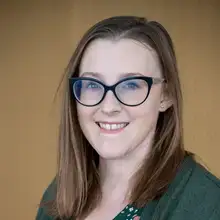
Jacquelyne Thoni (Tony) Howard a Professor of Practice of Data and the Associate Director of Student Engagement at the Connolly Alexander Institute for Data Science at Tulane University. She earned a Ph.D. in U.S. History from Fordham University. As a historian, her teaching, research, and mentorship focuses on data literacy, critical data studies, the history of data and technology, and the digital humanities. She is a founding co-editor of the nationally recognized and award-winning digital guide, Feminist Pedagogy for Teaching Online and has a co-edited volume, with the same title, forthcoming from Athabasca University Press (2025).
About the 2023 Fall Faculty Institute
In the spirit of reviving our campus community, this year’s institute will showcase local projects, initiatives, and campus opportunities for growth and professional development. This will be an opportunity to see what our colleagues are doing, discuss what has worked and what we’d do differently, and discover the resources to move us forward on the projects we care about.
The aims of the Fall Faculty Institute are:
- Connect faculty across departments and disciplines
- Foster communities through discussion and collaboration
- Share experiences and expertise with pedagogical approaches and research
- Highlight existing resources and opportunities and identify areas for improvement
About the 2021 Fall Faculty Institute
Keynote Speaker: Kevin Gannon
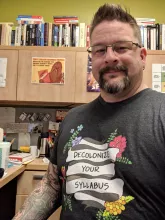
Kevin Gannon serves as Director of the Center for Excellence in Teaching and Learning (CETL) and Professor of History at Grand View University in Des Moines, Iowa, where he’s taught since 2004. His teaching, research, and public work (including writing) centers on critical and inclusive pedagogy; race, history, and justice; and technology and teaching. He writes for Vitae (a section of The Chronicle of Higher Education), and his essays on higher education have also been published in Vox and other media outlets. His book Radical Hope: A Teaching Manifesto, was published by West Virginia University press in Spring, 2020, as part of their Teaching and Learning in Higher Education series, edited by James M. Lang. He also gives frequent talks and workshops, and appeared in the Oscar-nominated documentary 13th, directed by Ava DuVernay.
You can find him on Twitter: @TheTattooedProf.
This session will explore not only the research basis for Inclusive Pedagogy, but practical strategies for its application. It’s one thing to say “these are great evidence-based practices,” but unless we’re able to put them into operation in, say, four sections of our 101 course, the evidence doesn’t help us so much. We’ll examine areas of Inclusive Pedagogy such as sense of belonging, representation, and accessibility, and participants will have the opportunity to think about how they might implement these strategies in their own practice.
About the 2020 Fall Faculty Institute
Keynote Speaker: Matthew Shapiro
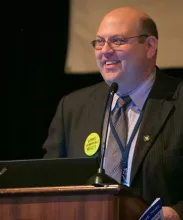
Matthew Shapiro is the Associate Director, Public Affairs for the National Alliance on Mental Illness-New York State (NAMI-NYS), the state chapter of NAMI, the nation’s largest grassroots organization dedicated to improving the lives of individuals and family members impacted by mental illness. A passionate advocate with a dual perspective of someone with lived experience as well as a family member, Matthew directs NAMI-NYS’s public policy platform and communication efforts along with organizing NAMI-NYS’s annual education conference and managing other special projects.
Matthew is the host of the NAMI-NYS produced television program Mental Health Now and is a frequent guest on Capital Region television and radio programs (such as Capital Tonight, Capital Pressroom and the AMC Roundtable) to discuss mental health issues. He has also presented at numerous national conferences and conventions including the CIT International Convention, the annual NIMH Outreach Partner Program meeting, the CNS Summit, the We Work for Health Summit and the NAMI National Convention. He also provides the family/consumer perspective at the Crisis Intervention Trainings held by the Albany Police Department and Albany County. He also presents to each class of cadets in the Albany Police Academy.
About the 2019 Fall Faculty Institute
Keynote Speaker: Jason Schmitt

Jason Schmitt is a filmmaker, journalist, and Chair of the Department of Communication, Media & Design at Clarkson University in Potsdam, NY. Schmitt concentrates his research toward online education impacting a global audience, open access relating to academic publications, and the reproducibility crisis in science.
Schmitt’s documentary, “Paywall: The Business of Scholarship,” specifically investigates the economic and societal impact of academic publishing, the $25.2 billion a year that flows into for-profit academic publishers, the 35-40% profit margin associated with the top academic publisher Elsevier, and how that profit margin is often greater than some of the most profitable technology companies like Apple, Facebook, and Google.
About the 2018 Fall Faculty Institute
Keynote Speaker: Christopher Kukk
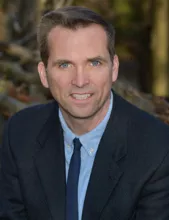
This talk combines research findings in the fields of neuroscience and social sciences to demonstrate how and why compassion is a key source of success in achieving several interconnected goals in education (i.e., more effective teaching and learning as well as more productive teams/departments).
Christopher Kukk is the author of the text The Compassionate Achiever and Professor of Political Science/Social Science at Western Connecticut State University and the founding Director of the Center for Compassion, Creativity and Innovation.
About the 2017 Fall Faculty Institute
Keynote Speaker: Ernest Morrell
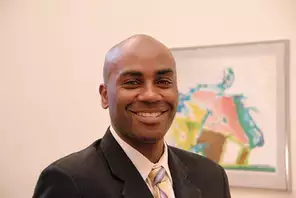
Ernest Morrell is the Coyle Professor in Literacy Education an inaugural director of the Center for Literacy Education in the University of Notre Dame’s Institute for Educational Initiatives. Morrell is serving a three-year term on the American Educational Research Association’s Executive Committee (AERA). Prior to this position, Morrell was the Macy Professor of English Education at Columbia University’s Teachers College and was the director of Columbia’s Institute for Urban and Minority Education (IUME). In addition to this work, he has been president of the National Council of Teachers of English and a member of the International Literacy Association and the ILA’s Literacy Research Panel.