2025 Fall Faculty Institute: Teaching, Learning and Communities of Resilience
About the 2025 Fall Faculty Institute
Aside from service and scholarly projects, the essence of faculty work at SUNY Oneonta is instruction, teaching and learning. It is work that calls for concerted efforts and weighing in on several core considerations including learning goals, knowing your students, mastery of content, and utilizing updated research and pedagogical strategies. While there are many challenges facing faculty, from COVID-19 pandemic and shifting learning goals, to the advancements of Artificial Intelligence, the challenges of the current political climate, and student mental health challenges, it is important to remember the community that our campus provides to explore, research, and implement a wide range of strategies to support student learning. The Fall Faculty Institute is a place to allow the campus to come together to share solutions and broaden community. It seeks to focus on addressing the question how are faculty, who are at the center of instruction, supported to thrive in the existing heightened environment? Topics that address this can include:
- Belonging: Reflect on how conversations of belonging center around the work we do to make sure students are intellectually and socially integrated into the campus community. How do we extend the same zeal for community to ourselves?
- Teaching with Compassion and Compassion Fatigue: Engage in conversation around balancing the expanding support students need to be successful and the fatigue faculty are experiencing with the growing demands.
- Effective Retention Strategies: Share strategies for ensuring student retention and success and how they are or can be implemented across campus.
- Cultivating Collaboration and Community Solidarity: Highlight efforts to build collaboration and community on campus and discuss the positive impacts of such efforts.
- Academic Freedom: Explore the vital role of academic freedom in maintaining an innovative campus culture and vibrant campus dialogue or examine the principles and challenges to academic freedom in higher education.
- Teaching in an Ever-Changing Educational Landscape: Explore current questions in education including: What impact will the current administration have on our higher education landscape? How might this impact our teaching? What steps can/should be taken?
This 2025 Fall Institute is an avenue for faculty to enquire, examine, and explore ways for achieving high-impact instruction and simultaneously connecting to broader communities. Note that the objectives of the Fall Faculty Institute are to:
- Connect faculty across departments and disciplines
- Foster communities through discussion and collaboration
- Share experiences and expertise with pedagogical approaches and research
- Highlight existing resources and opportunities and identify areas for improvement
Keynote Speaker: Rebecca Pope-Ruark
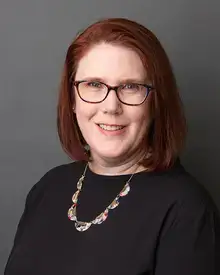
Dr. Rebecca Pope-Ruark is the director of the Office of Faculty Professional Development at the Georgia Institute of Technology in Atlanta, GA. A former tenured professor with 17 years experience teaching undergraduates as well as an experienced facilitator and certified coach, she is the author of two books: Unraveling Faculty Burnout: Pathways to Reckoning and Renewal (Johns Hopkins University Press, 2022) and Agile Faculty: Practical Strategies for Managing Research, Service, and Teaching (University of Chicago Press, 2017). She is also the host of the agile academic, a podcast for women in higher education. Rebecca coaches around the topics of faculty burnout, career development, compassionate leadership, and the day-to-day challenges and opportunities of being a faculty member or leader.
Schedule & Session Descriptions
Thursday, October 23
- 11:00am – 12:00pm – Concurrent Sessions
- Session A-1 (11:00am – 11:30am): Grading for Greatness: Equitable, Engaging, Effective; Lauren Stephenson
- Session A-2 (11:30am – 12:00pm): Zapped Unaware by Varied Apps Usage; Penina Kamina and Mary Ochieng
- Session B (11:00 am – 12:00pm): Resilience Through Our Eyes: Building Campus Community with What We Have; SUNY Oneonta Coalition for Faculty and Staff
- 12:00pm – Lunch
- 12:30pm – Keynote: Unraveling Faculty Burnout: Strategies for Acting with Purpose, Connection, and Balance; Dr. Rebecca Pope-Ruark
- 1:45pm – 2:45pm – Concurrent Sessions
- Session A-1 (1:45pm – 2:15pm): Checked In, Not Checked Out: High-Leverage Strategies for Every Learner; Julienne Cuccio Slichko
- Session A-2 (2:15pm – 2:45pm): Designing Together: Inclusive Practices for Student-Driven ePortfolios; Ed Beck
- Session B (1:45pm – 2:45pm): Mindfulness Matters: Building Resilience for Students and Our Community; Kathryn Finin, Brian Lowe, Alissa Walls, Jannine Webster
- 2:45pm – 3:45pm – Concurrent Sessions
- Session A-1 (2:45pm – 3:15pm): Next Steps: Implementing the University Research Plan; University Research Plan Task Force
- Session A-2 (3:15pm – 3:45pm): Supporting Students with Disabilities: Cultivating Belonging; Jenny Bagby and Jeannine Webster
- Session B (2:45pm – 3:45pm): Supporting Students to Listen and Talk Across Disagreement; Sallie Han, Erin Francisco, and Christopher Keegan
- 3:45pm – Light Refreshments
- 4:00pm – Lightning Round Presentations
- Stratification and the Post Pandemic Experiences of Afro Latinx Community; Remi Alapo
- Phone Free Classroom; Rhea Nowak
- Building Community Through Sustained Professional Development; Chilton Reynolds
- Student Portfolios; Faculty Center Staff
- 4:30pm – Closing Remarks
Grading for Greatness: Equitable, Engaging, Effective
Lauren Stephenson
With a basic description of student and faculty context, this session will describe a framework for equitable grading practices I have been using in the classroom. This framework, along with the example that I present, has been easy to implement, incorporates student voices and encourages student engagement with content as well as content retention.
Zapped Unaware by Varied Apps Usage
Penina Kamina and Mary Ochieng
Technology enhances efficiency but research has also shown that in particular communication technology use can be a source of interruptions and can place unexpected demands on faculty. In this presentation we will discuss research on faculty burnout that is related to technology use particularly the various applications that faculty interact with.
We will highlight the various applications in use by involving participants to share some of the applications that they interact with on a day day to basis, how and when they use them and what guides frequency of use. We will conclude with a discussion on a way forward for well being for App users as proposed from research and also elicit proposals from the audience.
Resilience Through Our Eyes: Building Campus Community with What We Have
SUNY Oneonta Coalition for Faculty and Staff
Tired of talking about campus challenges? Let’s build solutions instead. Using photography and art, we’ll create visual maps of what makes our campus resilient and identify concrete ways to make it even better. You’ll leave with new colleague connections, a unique piece of art, and actual strategies you can implement. No presentations, no homework, just collaborative creativity that gets results.
Participants will work in teams to photograph and/or draw spaces that represent belonging on campus, then transform those images along with everyday recycled items – into collaborative “Campus Resilience Maps” that showcase what makes our community strong while identifying concrete opportunities for improvement.
Keynote: Unraveling Faculty Burnout: Strategies for Acting with Purpose, Connection, and Balance
Dr. Rebecca Pope-Ruark
It’s a challenging time to be in higher education, so in this workshop, we will explore what burnout is, how to recognize it in yourself and others, and how to mitigate it by leaning into purpose, connection, and balance.
Checked In, Not Checked Out: High-Leverage Strategies for Every Learner
Julienne Cuccio Slichko
Are your students participating in class or zoning out? Engagement often depends on how teachers involve them in the moment. This interactive session will highlight two high-leverage practices that keep learners “checked in” to the content, maximize participation, and increase student accountability. The speaker will demonstrate evidence-based strategies that increase student learning outcomes for all learners. Participants will explore ways to scaffold content and discover how unison responding can boost confidence and promote equity of voice.
Designing Together: Inclusive Practices for Student-Driven ePortfolios
Ed Beck
This session explores how our campus used digital pedagogy and inclusive design to build a stronger sense of community around ePortfolio creation. Instead of treating ePortfolios as a solo project or a technical hurdle, we created a collaborative design studio where students learn from and support one another. The Faculty Center trained student consultants to serve as peer mentors, helping others design ePortfolios that reflect their learning, growth, and goals.
At the same time, we modified WordPress to make it easier for students to get started and to better support accessible, inclusive design practices. Together, these efforts show how small design changes—both technical and pedagogical—can help students feel more confident, connected, and creative in digital spaces. Participants will leave with ideas for building peer-led support networks, fostering digital belonging, and using open tools like WordPress to strengthen their teaching and learning communities.
Mindfulness Matters: Building Resilience for Students and Our Community
Kathryn Finin, Brian Lowe, Alissa Walls, Jannine Webster
For emerging Adults, beginning a process of teacher certification that will enable them to bring mindfulness offerings to students and the broader SUNY-Oneonta community. At a time of increased pressures on students, faculty, and staff from every direction, we believe that our community needs as many tools as possible to center ourselves, build resilience and agility, and avoiding burnout. By sharing our experiences and a range of proven mindful practices, we would like to begin conversations and collaborations with our SUNY-Oneonta community that can contribute to increased feelings of belonging, while bringing increased energy and focus to our teaching and the work we love in a quickly changing educational landscape. Extending this work to students, in turn, provides them with effective self-supporting tools to help them personally develop and achieve their academic and professional goals.
Next Steps: Implementing the University Research Plan
University Research Plan Task Force
Join members of the University Research Plan Task Force to discuss elements of the plan, how it might be implemented, which strategies to employ, and a timeline for accomplishing the primary priorities of the plan.
The task force members who will be present include Dean Tracy Allen, Assistant to the University President on Research Funding, Pamela Dubitsky, Director of Office of Research, Grants, and Contracts, Barbara Hein, Senior Grant Writer, Audrey Porsche, Associate Director of Scholarly Activities.
Supporting Students with Disabilities: Cultivating Belonging
Jenny Bagby and Jeannine Webster
Supporting students with disabilities goes beyond following an accommodation plan. The discussion will begin with review of a sample accommodation plan and case study as the basis for considering the importance of both compliance and inclusion in supporting students with disabilities. Participants will leave with a better understanding of their role in supporting students with disabilities and practical and simple strategies to foster inclusion and belonging for disabled students in their classes.
Supporting Students to Listen and Talk Across Disagreement
Sallie Han, Erin Francisco, and Christopher Keegan
How do we teach students to engage across profound disagreement? How can all of us learn to listen meaningfully when listening seems impossible? This session explores how faculty can navigate the tensions between academic freedom and community responsibility, so that our classes can be spaces where students can interact productively across profound disagreements while maintaining intellectual rigor and mutual respect. Led by presenters from SUNY Oneontaa’s Institute for Civil Society and Democratic Education, Center for Racial Justice and Inclusive Excellence, and Office of Equity and Inclusion, we will consider how to frame controversial discussions that acknowledge power dynamics without shutting down dialogue, helping students distinguish between ideas and identity while recognizing when the two legitimately intersect. Our aim will be to develop frameworks for structured disagreement that both protects vulnerable students and preserves space for challenging conversations. This session speaks to the themes of academic freedom and belonging that are critical for communities of resilience and will invite active participation from attendees.
Friday, October 24
- 1:00am – 12:00pm – Concurrent Sessions
- Session A: How to Boost Student Response Rates on Course Evaluations; Bryan Picciotto
- Session B: Suicide Prevention Through QPR (Question, Persuade, Refer); Jonathan Chester
- 12:00pm – Lunch
- 12:30pm – Lightning Round Presentations
- Experiential Learning Portal – Reflect, Showcase, Collaborate; Christy Funsch
- Faculty Thriving in a Time of Transformation: Belonging, Resilience, and Intersectionality in Teaching Afro Latinx Studies; Remi Alapo
- Transfer Together: Pathways to a Transfer-Friendly Campus; Stephanie Hollander
- 12:50pm – President’s Remarks
- 1:10pm – 2:10pm – Concurrent Sessions
- Session A: From Points to Progress: Enhancing Inclusive Learning; Lauren Stephenson
- Session B (1:40pm – 2:10pm): Open Session with Dr. Rebecca Pope-Ruark
- 2:10pm – 3:10pm – Addressing Burnout: Practicing Self-Compassion and Compassionate Leadership; Dr. Rebecca Pope-Ruark
- 3:10pm – 4:10pm – Concurrent Sessions
- Session A: Let’s Be Real: Moving Beyond Content to Connection; Sport & Exercise Science Department
- Session B: Communities of Resistance: Pedagogy and Policy After Paulo Freire; Racheal Fest
- 4:10pm – Social Hour
How to Boost Student Response Rates on Course Evaluations
Bryan Picciotto
Course evaluations are required of every class at SUNY Oneonta, but faculty frequently struggle to get enough students to complete them. A dearth of responses not only skews survey data; it also misrepresents your teaching excellence and expertise for better or worse! What is your average response rate and how can you improve it? This workshop reframes course evaluations from a requirement to a relationship. The workshop explores a relational strategy for enhancing student participation in course evaluations — one that emphasizes reflection, dialogue, and belonging. Over the last 3 years, this strategy has yielded an average response rate of 79.6% across his 18 courses at SUNY Oneonta, totaling 409 responses from 514 students. In this workshop, you will be invited to: (1) reflect on and share your strategies for getting students to complete course evaluations; (2) learn about Dr. Picciotto’s relational strategy of reflection, dialogue, and belonging; and (3) collaborate to produce a customized course evaluation plan for this semester. As a result, you will have an opportunity to build community with other faculty, refine your teaching practice, and hopefully boost your future response rates.
Suicide Prevention Through QPR (Question, Persuade, Refer)
Jonathan Chester
QPR stands for Question, Persuade, and Refer — the three simple steps anyone can learn to help save a life from suicide. Just as people trained in CPR and the Heimlich Maneuver help save thousands of lives each year, people trained in QPR learn how to recognize the warning signs of a suicide crisis and how to question, persuade, and refer someone to help.
From Points to Progress: Enhancing Inclusive Learning
Lauren Stephenson
Small changes can make big impacts. Many faculty employ equitable teaching methods, but are searching for ways to align that with equitable grading practices, specifically practices that have a big impact and require minimal effort to implement. Over the past several years I have been developing hybrid grading strategies that incorporate more traditional assessment methods with equitable grading practices. These strategies live on a spectrum and can be adapted to consider the social context that students and faculty bring to the classroom as well as the varied natures of the disciplines offered at SUNY Oneonta.
Addressing Burnout: Practicing Self-Compassion and Compassionate Leadership
Dr. Rebecca Pope-Ruark
Whether you have a title or not, you are likely a leader in some way at your institution – whether through a formal role, your reputation at the institution, or a level of influence you’ve developed. In this extended session, we’ll talk about what it means to practice self-compassion and self-care as a professional and ways you can support others who might be experiencing burnout.
Let’s Be Real: Moving Beyond Content to Connection
Sport & Exercise Science Department
The SPES department has begun using the Pedagogy of Real Talk with Paul Hernandez in all of our classes. From real talks to expanded lessons, we are fostering belonging and vulnerability in the classroom to enhance student engagement with content and cultivating a sense of community. Faculty will discuss how they implement these strategies into their classes and the impact it has on students. The presentation will also discuss plans for assessment and future expansion of this program to address issues with retention using this framework.
Communities of Resistance: Pedagogy and Policy After Paulo Freire
Racheal Fest
Last semester, faculty from across the disciplines came together in the Faculty Center to read Paulo Freire’s classic text, Pedagogy of the Oppressed. The book offers a vision for the nature and purpose of education especially relevant to our present moment, with a focus on communities of resistance. At this session, participating colleagues will share how our conversations continue to inform their approaches to pedagogy and policy on our campus.